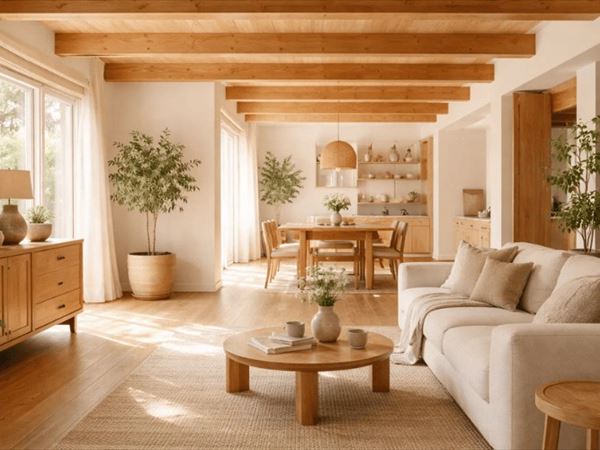
Breathe Easy: Why Low-Energy Timber Homes Offer Better Air Quality Than Traditional Builds
For homeowners who care about natural materials, low embodied carbon, and pristine indoor air quality.
Meet David & Chloe
David and Chloe are deeply passionate about the environment and both suffer from seasonal allergies. They want natural, low-carbon materials and indoor air quality they can trust, and they're sceptical of modern homes that feel "plastic-wrapped" and synthetic.
Timber Frame & SIPs vs. Traditional Brick-and-Mortar
Timber Frame and SIPs (Structural Insulated Panels) construction are built largely off-site in a controlled factory environment, then assembled on site in a fraction of the time of a traditional masonry build. Beyond speed, timber-based systems carry significantly lower embodied carbon than brick-and-block, since timber stores carbon rather than releasing it during manufacture.
Debunking the "Stuffy Airtight Home" Myth
A common worry is that a sealed, airtight home will feel stale. In reality, an MVHR (Mechanical Ventilation with Heat Recovery) system runs constantly in the background, extracting stale air loaded with pollen, dust, and humidity, and replacing it with fresh, filtered outdoor air, while recovering the heat from the outgoing air. The result is a home with consistently better air quality than one with leaky windows and draughts.
The Architect's Value
An architect selects non-toxic, breathable, natural materials, timber cladding, wood-fibre insulation, lime renders, that complement the local landscape while meeting strict eco-building standards, ensuring the finished home is as healthy to live in as it is beautiful to look at.