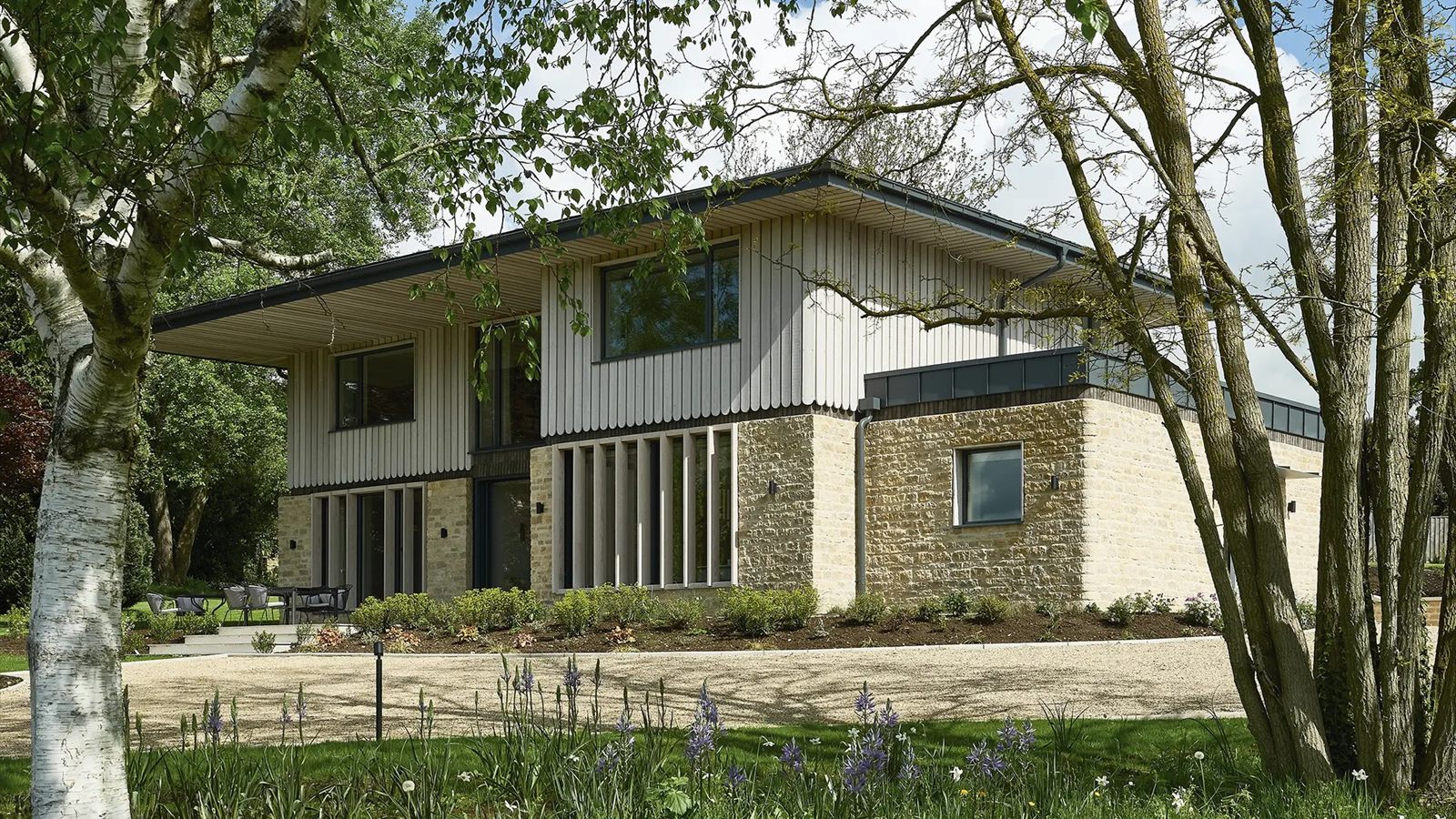
The Zero-Bill Framework: How We Design Homes That Generate Their Own Power
For homeowners who are terrified of rising energy prices and want a forever home that is safe, healthy, and virtually free to run.
Meet Tom & Sarah
Tom and Sarah are in their 30s with two young children. They want to build a forever home, but they're terrified of future energy price shocks. Their priority isn't luxury, it's security: a house that keeps their family warm, healthy, and protected from volatile bills for decades to come.
Solar PV + Battery: Free Power, Day and Night
A rooftop solar array generates the most electricity in the middle of the day, exactly when most families are out at work or school. By pairing solar panels with a domestic battery, that free daytime energy is stored and released in the evening, when the household actually needs it for cooking, lighting, and charging an EV.
Why a Tiny Amount of Energy wwwwGoes a Long Way
The secret isn't just generating power, it's needing less of it in the first place. A highly insulated building envelope, with continuous insulation and minimal thermal bridging, means heat loss is reduced to a fraction of a conventional home. The result: a small solar array and a modest heat pump can comfortably heat the entire house, even in winter.
The Architect's Value
Anyone can bolt panels onto a roof, but an architect calculates the precise roof pitch and orientation needed to maximize solar capture without compromising the home's visual design. They balance energy performance against aesthetics, ensuring the panels read as a deliberate design feature rather than an afterthought bolted on top.