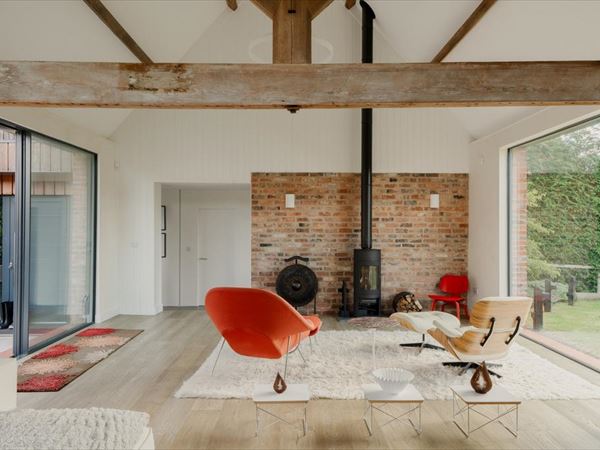
Taming Tall Spaces: Heating Cavernous Conversions Efficiently
For homeowners converting a warehouse or barn with dramatic double-height ceilings who worry about heating bills and cold spots.
Meet The Okafors
The Okafor family bought an old industrial warehouse with soaring 6-metre ceilings and huge open volumes. They love the drama of the space, but they're worried that all that air will be impossible and expensive to heat, with warmth simply rising and disappearing into the roof.
Zoned, Low-Temperature Heating
Rather than heating the whole volume of air, underfloor heating warms the occupied zone at low level where people actually live — radiating gentle, even warmth upward without wastefully heating the air high above head height.
Destratification and Smart Air Movement
Warm air naturally rises and pools near tall ceilings. Quiet destratification fans gently recirculate that trapped warm air back down to where it's needed, recovering heat that would otherwise sit unused near the roof.
The Architect's Value
An architect designs the insulation and glazing strategy around the building's true volume, not just its floor area, ensuring the roof, in particular, is insulated to a standard that matches the scale of the space above.